
Changes for Healthcare Employees

Diverse staff of 8 medical professionals

The California Supreme Court Confirms Healthcare Employees’ Choice to Waive Second Meal Period and Provides Clarity To Healthcare Employers

On December 10, 2018, the California Supreme Court handed a victory to both healthcare employers and their employees, upholding the ability of certain healthcare employees to voluntarily waive their second meal breaks even if they work more than 12-hour shifts. The Supreme Court’s decision ends nearly ten years of litigation and uncertainty by clarifying an apparent discrepancy between the Labor Code and Industrial Welfare Commission (“IWC”) Wage Order No. 5.

Labor Code section 512(a) provides that employees who work more than five hours must be given a 30-minute meal period, and employees who work more than 10 hours must be provided with an additional 30-minute meal period. Section 512 (a) further provides that employees who work no more than 12 hours may waive the second meal period if they have taken the first. By contrast, IWC Wage Order No. 5 section 11(D), adopted on June 30, 2000, provides that health care industry employees who work in excess of 8 hours in a day may waive one of their two meal periods. Unlike section 512(a), section 11(D) has no twelve-hour cap on waivers for second meal periods.

This difference between section 512(a) and section 11(D) led to decades of litigation in Gerard v. Orange Coast Memorial Medical Center, where plaintiffs sought penalties, unpaid wages, and injunctive relief against their former employer. Plaintiffs argued that the defendant’s voluntary meal period waiver policy, which was entirely consistent with section 11(D), violated Labor Code section 512(a) because it allowed employees to waive their second meal period even when they worked shifts lasting longer than twelve hours.
The Court of Appeals initially agreed with plaintiffs in Gerard v. Orange Coast Mem’l Med. Ctr. (2015) 234 Cal. App. 4th 285 (Gerard I). Following the holding in Brinker Restaurant Corp. v. Superior Court (2012) 53 Cal.4th 1004 [the IWC cannot issue new wage orders which conflict with existing provisions of the Labor Code], the Court of Appeals found that section 11(D) and Labor Code section 512 were in conflict and therefore section 512 controlled. Gerard I created potential exposure for thousands of healthcare providers across the state of California who had adopted meal waiver policies for their employees relying on section 11(D).

In 2015 the Legislature responded to Gerard I and passed S.B. 327, which amended Labor Code section 516 to explicitly clarify that IWC Wage Order No. 5 section 11(D) was valid and enforceable notwithstanding section 512 or any other law. Accordingly, while Gerard I ostensibly had no impact on health care providers after S.B. 327 was passed, what was left unclear and unresolved was whether health care providers could be held liable for “violations” which predated S.B. 327.

This ambiguity was clarified by the Supreme Court on December 10, 2018, in Gerard v. Orange Coast Medical Center (2018) 240 Cal.Rptr.3d 757 (Gerard II). In light of S.B. 327, the Supreme Court vacated Gerard I and ordered the Court of Appeal to reconsider its previous decision. Upon reconsideration, the Court of Appeal reversed itself and plaintiffs appealed that decision to the Supreme Court. In Gerard II, the Supreme Court unanimously upheld the Court of Appeal decision holding that at the time section 11(D) was adopted by the IWC on June 30, 2000, Labor Code section 516 gave the IWC broad power to promulgate regulations with respect to meal periods for California workers notwithstanding other sections of the Labor Code. Although the IWC’s authority under section 516 was later amended by the Legislature such that new wage orders could not conflict with section 512, section 11(D) was already effective and, therefore, was always valid and enforceable.

In rendering its decision, the Supreme Court noted that the United Nurses Association of California/Union of Health Care Professionals (UNAC) and Service Employees International Union Local 121RN both supported S.B. 327 and overturning Gerard I because section 11(D) gave healthcare employees greater flexibility and choice.
Accordingly, Gerard II represents a win not only for healthcare providers who no longer have to worry about liabilities which predate S.B. 327, but also for the freedom of healthcare employees to have greater flexibility in taking meal breaks. Gerrard II could also signal the Supreme Court’s willingness to consider employee choice and agency in future employment-related decisions.

Whitney, Thompson & Jeffcoach LLP is a law firm specializing in litigation with proven success in litigating different types of matters including healthcare and employment disputes. Whitney, Thompson & Jeffcoach are pleased to announce the expansion of its employment litigation team with its hiring of Alyson Berg, a former Assistant United States attorney who defended, through appeal, the government in employment discrimination and wrongful termination matters, in addition to providing employment and anti-harassment related training.

Ministerial Exception Not Applicable

A female teacher with a blue shirt is in a classroom, smiling, as her young students work on a project.

Ninth circuit finds no application of the “ministerial exception” to ADA claim of teacher at religious school

Recently, the Ninth Circuit in Biel v. St James School, 911 F. 3d 603 (9th Cir. 2018) held that the “ministerial exception,” an affirmative defense to employment claims for religious employers, did not apply to a teacher’s Americans with Disabilities Act claim. Biel was a fifth grade teacher at St. James School, a Catholic school, who claimed that the non-renewal of her employment contract after she requested a leave of absence to undergo breast cancer treatment was in violation of the ADA. The school moved for summary judgment on the basis that the “ministerial exception,” which precludes application of employment discrimination laws to personnel decisions of religious institutions barred her claim. The employer prevailed at the District Court. The Ninth Circuit reversed and remanded concluding that Biel’s position with St. James School reflected a limited role in religious instruction and the exception did not apply. The court analyzed the four-factor test set forth in Hosanna-Tabor Evangelical Lutheran Church & School v. E.E.O.C., 565 U.S. 171 (2012), and determined that Biel’s position as a lay teacher at a religious school where she taught religion as one of her many subjects to the fifth grade class was insufficient to establish the applicability of the ministerial exception. The court emphasized that although Biel taught religion in the classroom, this was only one factor of the four-factor test that would implicate the “ministerial exception.” Simply holding the position of a school employee who teaches religion is not sufficient to invoke the “ministerial exception” because such a rule would essentially collapse the four-factor test into one determinative factor rather than analyzing the totality of the circumstances.

In a lengthy dissent, Judge Fisher analyzed the employment contract, employee handbook, and Biel’s performance evaluation in concluding that the “ministerial exception” applied. The dissent emphasized that Biel’s position as a teacher at a Catholic school whose contract required a commitment to developing the faith community and a handbook that explained religious development as a goal of the staff showed, under the totality of the circumstances, that the “ministerial exception” applied. Judge Fisher also rejected Biel’s subjective opinions as to the non-religious aspects of her job as insufficient to overcome the application of the “ministerial exception.”

Biel provides guidance for understanding how California courts will likely apply the four-factor Hosanna–Tabor test to employment discrimination claims brought by employees of religious organizations. Employers should evaluate the job duties and documents of the particular employee before raising the “ministerial exception” defense to any employment discrimination claim. Nevertheless, it should be emphasized that the Biel decision is limited to the application of the “ministerial exception” and a religious institution can always file a motion for summary judgment establishing that the employment decision was based on legitimate non-discriminatory reasons, such as pedagogical and classroom management concerns under the facts of the Biel case, rather than any alleged violation of the federal employment discrimination laws.

New Disclosure Requirements for Mediation

Two professionals hold a tablet computer on a wooden desk.

The California Supreme Court in Cassell v. Superior Court (Wasserman, Comden, Casselman & Pearson LLP) (2010) 51 Cal.4th 113, held that the mediation confidentiality encompasses discussions between the attorney and the client, and therefore, the confidentiality provisions of Evidence Code 1115 barred any evidence of what was discussed between the lawyer and the client before and during the mediation. In effect, the Court’s holding barred any sort of malpractice action against the lawyer related to conduct that occurred before and/or during the mediation.

Since that ruling, the California Judicial Council has worked on a proposed change to address the holding in Cassell. The California Legislature enacted Evidence Code 1129 which now requires certain disclosures to be made in writing to a client as soon as reasonably possible before the client agrees to participate in mediation.

Pursuant to Evidence Code 1129, the printed disclosure must be (1) in the preferred language of the client in at least 12-point font; (2) be printed on a single page that is not attached to any other document provided to the client; and (3) include the names of the attorney and the client and be signed and dated by the attorney and the client. Evidence Code 1129 also includes the required language that must be included in the written disclosure. Of note, a lawyer’s failure to comply with this section will not be a basis to set aside any agreement prepared in the course of a mediation.

It is unknown at this point whether a lawyer’s failure to comply with Evidence Code 1129 will open the door to malpractice claims arising out of a mediation. What is clear, though, is the Legislature’s directive to lawyers to make sure that their clients understand the mediation process and are fully advised of their rights.

*Marshall Whitney and Mandy Jeffcoach are partners with the law firm of Whitney, Thompson & Jeffcoach LLP and are Certified Legal Malpractice Law Specialists by the State Bar of California, Board of Specialization. They regularly provide counseling to law firms and lawyers and can be reached at (559) 753-2550 or mwhitney@wtjlaw.com & mjeffcoach@wtjlaw.com.

Retired Justice Joins Whitney, Thompson & Jeffcoach

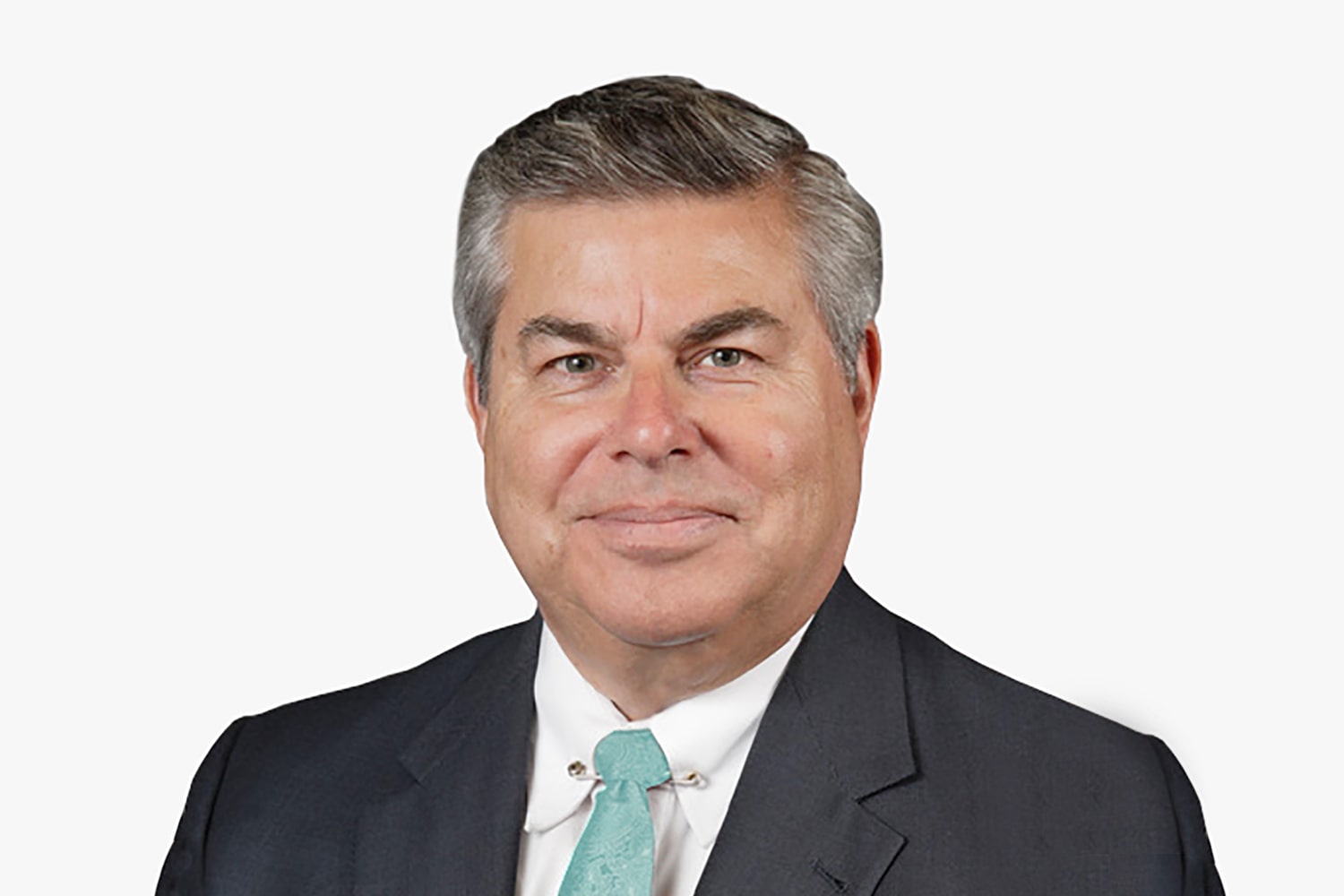
James Ardaiz Headshot

Whitney, Thompson & Jeffcoach is proud to announce their newest addition, Justice James Ardaiz, retired Administrative Presiding Justice from California’s Fifth District Court of Appeal. Prior to joining the WTJ team, he was with Baker, Manock & Jensen PC in Fresno since 2011.

“I am pleased to join Whitney Thompson & Jeffcoach, an innovative law firm with highly accomplished attorneys and a cutting edge perspective on providing legal services to its impressive client base,” said Ardaiz.

Justice Ardaiz’s experience as a trial and appellate judge includes business, personal injury, governmental policy, environmental, agricultural, estate, and property disputes. He has authored over 2,000 appellate opinions and participated in over 6,000 total opinions, encompassing all areas of the law practiced in the State Courts of California, with precedent-setting opinions in virtually all areas of the law. As a trial judge, he primarily handled general civil and criminal trials.

Since retiring from the Court of Appeal, Justice Ardaiz’s practice has primarily consisted of mediation, arbitration and appellate evaluation, and strategic planning in large litigation, although he does act as counsel to a limited number of commercial clients. His primary case involvement has been in commercial and property disputes, with personal injury being a lesser portion of his case load.

“We are honored to have such an experienced, distinguished former judge join our team,” said Marshall Whitney. “Jim Ardaiz aligns perfectly with our principles and goals for our clients, and his many years of success are a great asset to us.”

Four Partners Leave McCormick Barstow to Establish New Firm

WTJ Whitney Thompson & Jeffcoach logo

Whitney, Thompson & Jeffcoach, LLP

FRESNO, Calif. (February 9, 2018) — Fresno business litigation attorneys Marshall Whitney, Tim Thompson, Mandy Jeffcoach, and Niki Cunningham are leaving McCormick Barstow to establish a new boutique litigation firm named Whitney, Thompson & Jeffcoach, LLP (WTJ), bringing years of experience together to create a new legal practice. The WTJ office is located at 8050 N. Palm Avenue, Suite 110 in Fresno, and the firm can be reached at wtjlaw.com and (559) 753-2550. See direct contact information for the partners below:

Marshall Whitney, Partner
mwhitney@wtjlaw.com

Tim Thompson, Partner
tthompson@wtjlaw.com

Mandy Jeffcoach, Partner
mjeffcoach@wtjlaw.com

Niki Cunningham, Partner
ncunningham@wtjlaw.com

The Latest with WTJ

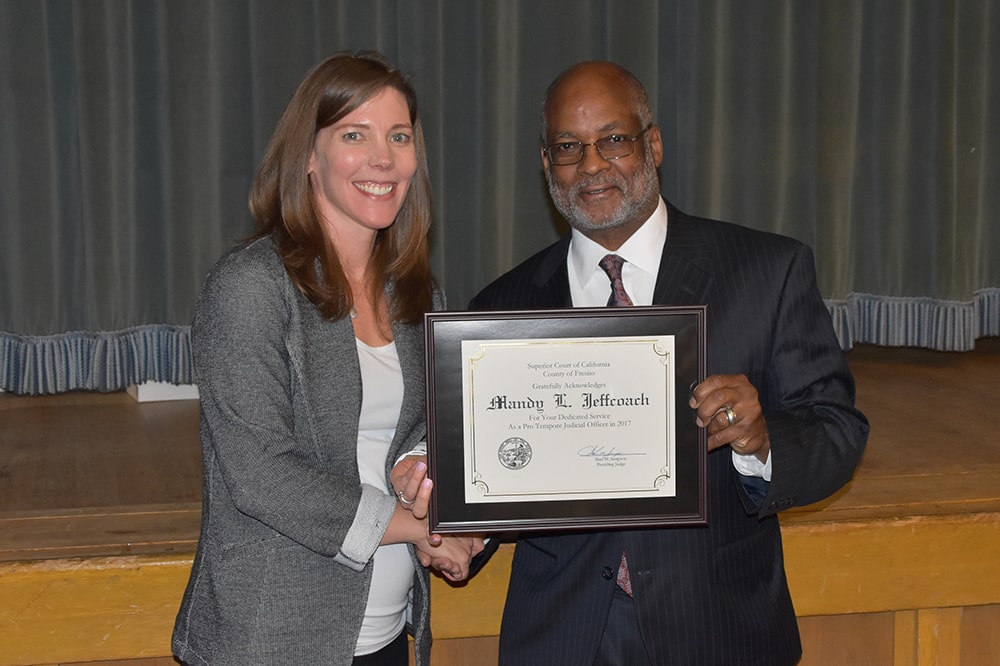
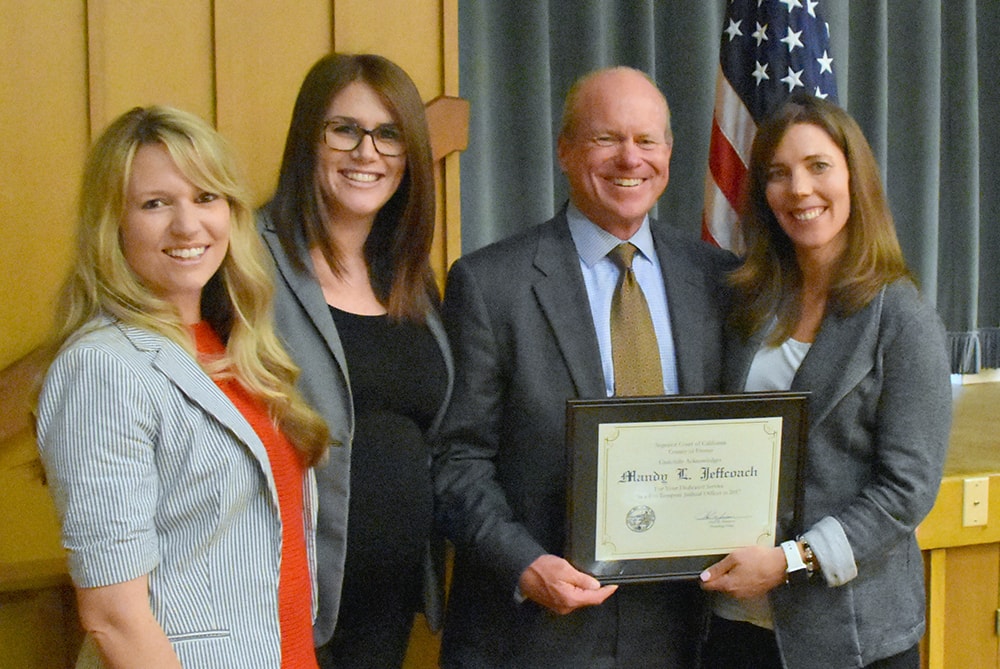
Mandy Jeffcoach poses with an award of recognition for pro bono service during a Fresno County Bar Association luncheon.

The attorneys at WTJ have been busy—outside of their normal careers, WTJ lawyers are always dedicating themselves to serve the community, and this time, that has resulted in an award and a speaking engagement for two of our partners, Mandy Jeffcoach and Marshall Whitney.

Mandy Jeffcoach recently received an award from the court for her pro bono service. She has donated an excess of 25 hours in the past year, and she was recognized at a Fresno County Bar Association Luncheon on April 6.

WTJ Law Awards
Photo by: Howard Watkins

Additionally, Marshall Whitney was a speaker at War Stories; Wine & Words of Wisdom on March 22. This annual event hosted by the FCYLA (Fresno County Young Lawyers Association) and the ABTL (Association of Business Trial Lawyers) invites experienced attorneys to tell entertaining war stories and provide their insight to lawyers young and old. Tim Thompson is the president of ABTL, and Niki Cunningham is the president of FCYLA.

WTJ Law
Photo by: Howard Watkins

McCormick Barstow Partners Form New Women-Owned Law Firm

WTJ Partners Niki Cunningham, Marshall Whitney, Mandy Jeffcoach, and Tim Thompson pose for a professional photo.

Fresno Business Journal

Four partners with Fresno law firm McCormick Barstow have struck out on their own to form a new boutique firm that will be majority women-owned.

Former McCormick partners Tim Thompson, Marshall Whitney, Mandy Jeffcoach and Niki Cunningham have joined forces to establish Whitney, Thompson & Jeffcoach. The attorneys have years of trial experience in areas including professional malpractice defense, business litigation, health care law, public entity defense, estate and trust litigation and construction law.

Combined, the four have nearly 90 years of experience in litigation practice and hope to create a lasting legacy in the Central Valley legal scene with their new firm — called WTJ for short.

WTJ’s clients include family-owned businesses, Fortune 500 companies, accountants, lawyers, physicians, farmers, landowners and other professional.

In addition to an emphasis on serving clients, WTJ’s attorneys said they will also focus on creating a culture of teamwork to foster creativity and problem solving.

“The founding of this new firm, based on the core values we will require of each other, energizes me to look forward to many more years of successfully serving our clients,” said Whitney, who had been with McCormick Barstow since 1978.

As a majority women-owned law firm, there will also be an emphasis on achieving a better work-life balance using collaboration, flexible schedules and remote-working technology — methods to exceed client needs while not being confined within four walls.

“Both women and men today want to spend quality time with their families,” Jeffcoach said. “It’s important for us to respect that balance, and our clients like to see that is a part of our overall teamwork and firm culture.”

In addition to the four partners, WTJ will begin with two support staffers, and will soon begin looking for a couple more associates to join the firm.

“Our approach to this firm opens a lot of doors in practicing law that others may not have available to them,” Cunningham said. “We want the right people, who are in this industry for the right reasons.”

Thompson described the split with McCormick Barstow as amicable, with some surprised of the move and others not since the four operated as a sort of unit within the Valley’s largest law firm.

Thompson said he and his partners are excited to start building a “separate and different legacy.”

“It is a tremendous responsibility when a client trusts us to resolve their legal disputes or counsel a business on ways to avoid disputes and grow their business,” he said. “We all feel blessed for these opportunities to serve and know that our clients recognize and appreciate the teamwork and collaboration my partners will all provide in our service.”

The WTJ office is located at 8050 N. Palm Ave., Suite 110, in Fresno. The firm can be reached at wtjlaw.com or 559-753-2550.

WTJ Attorneys Receive Recognition for Excellence in Industry

Two Super Lawyers magazines lay on a table, one of them opened to a page showing the top lawyers list.

Northern California Super Lawyers releases 2018 selections

FRESNO, Calif. (July 31, 2018) — Whitney, Thompson & Jeffcoach is pleased to announce that all five of the firm’s partners, as well as one associate, have been selected as 2018 Northern California Super Lawyers or Rising Stars. Marshall Whitney and Tim Thompson have been named on the list of Top 100 Super Lawyers, Mandy Jeffcoach has been chosen as a Business Litigation Super Lawyer, and Niki Cunningham and Kristi Marshall are listed as Business Litigation Rising Stars. Associate Kelley Lowe has also been named as a Civil Litigation Defense Rising Star.

Each year, no more than 5 percent of the attorneys in any one state are designated as Super Lawyers, and only 2.5 percent of attorneys in any one state are named as Rising Stars. Rising Stars represent the top up-and-coming lawyers who are under 40 years old or who have been practicing law for ten years or less.

“This is an incredible achievement not just for us as individual attorneys, but for our firm as a whole,” Marshall Whitney, WTJ Partner, said. “As we consistently strive toward excellence, these accolades confirm that we’re making an impact in our industry. We’re honored to be recognized for providing expert legal counsel to our valued clients in the Central Valley.”

Super Lawyers is a rating service of outstanding lawyers from more than 70 practice areas who have attained a high degree of peer recognition and professional achievement. The multiphase selection process includes independent research, peer nominations and peer evaluations. Bar associations and courts across the country have recognized the legitimacy of the Super Lawyers selection process.

WTJ Attorneys Continue to be Recognized for Excellence in Industry

Copies of the 2020 SuperLawyers publication

Northern California Super Lawyers Releases 2020 Selections

Whitney, Thompson & Jeffcoach is pleased to announce that seven of the firm’s partners, as well as one of counsel attorney and one associate, have been selected as 2020 Northern California Super Lawyers or Rising Stars. Mandy Jeffcoach has been selected to be on the list of Top 50 Women Super Lawyers, Marshall Whitney and Tim Thompson have been named on the list of Top 100 Super Lawyers, and Carl Refuerzo has been named as a Super Lawyer. Niki Cunningham, Courtney McKeever, Kristi Marshall, Will Jackson, Anna Barcus Allen are also listed as Rising Stars.

Each year, no more than 5 percent of the attorneys in any one state are designated as Super Lawyers, and only 2.5 percent of attorneys in any one state are named as Rising Stars. Rising Stars represent the top up-and-coming lawyers who are under 40 years old or who have been practicing law for ten years or less

“This is an incredible achievement not just for us as individual attorneys, but for our firm as a whole,” Marshall Whitney, WTJ Partner, said. “As we consistently strive toward excellence, these accolades confirm that we’re making an impact in our industry. We’re honored to be recognized for providing expert legal counsel to our valued clients in the Central Valley.”

Super Lawyers is a rating service of outstanding lawyers from more than 70 practice areas who have attained a high degree of peer recognition and professional achievement. The multiphase selection process includes independent research, peer nominations and peer evaluations. Bar associations and courts across the country have recognized the legitimacy of the Super Lawyers selection process.